- December 18, 2025
- Posted by: admin@ecabahrain
- Category: Audit
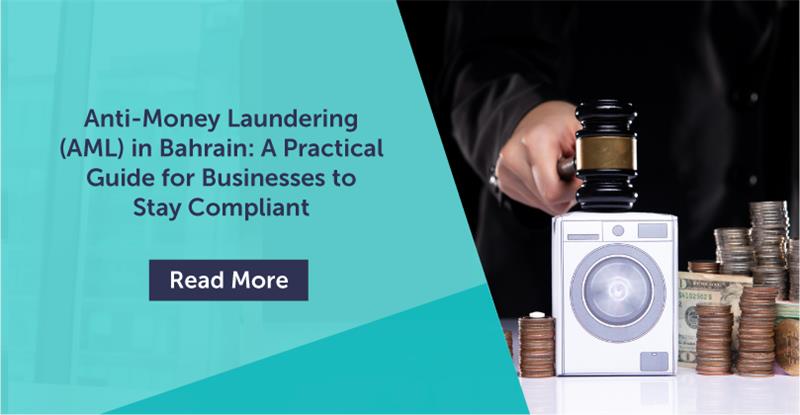
Anti-Money Laundering (AML) in Bahrain
Money laundering is more than a financial crime—it threatens economic stability, weakens institutions, and exposes businesses to serious reputational and regulatory consequences. As global enforcement intensifies, Bahrain has strengthened its Anti-Money Laundering (AML) and Counter-Terrorism Financing (CFT) framework to align with international standards and protect the integrity of its financial system.
Whether you are a bank, an audit firm, a real estate company, or a trading business, compliance with AML laws is not optional. This guide simplifies Bahrain’s AML/CFT obligations and provides clear steps for businesses to build a strong compliance culture.
Why AML Compliance Matters?
AML regulations aim to prevent criminals from disguising illicit funds as legitimate income. In Bahrain, these rules apply not only to financial institutions but also to a wide range of non-financial and professional service providers.
Why AML Compliance Matters?
AML regulations aim to prevent criminals from disguising illicit funds as legitimate income. In Bahrain, these rules apply not only to financial institutions but also to a wide range of non-financial and professional service providers.
Failing to comply can result in:
- Heavy financial penalties
- Reputational damage and loss of customer trust
- Regulatory sanctions or license suspension
- Challenges in maintaining banking relationships
- Criminal liability for management in serious violations
In short, strong AML compliance protects both your business and Bahrain’s reputation as a transparent regional financial hub.
Bahrain’s AML/CFT Legal Framework: What You Need to Know?
Bahrain’s framework is built on Legislative Decree No. (4) of 2001 and has been strengthened through multiple amendments to address emerging risks, including virtual assets and cross-border financial crimes.
Key supporting laws include:
- Law No. 54 of 2006 (Terrorist Financing)
- Decree-Law No. 29 of 2020 (Enhanced AML/CFT measures)
- Ministerial Orders 173/2017 & 108/2018 (Obligations for Commercial & Audit Registries)
- Order No. 7 of 2001 (Financial institution controls)
- International treaties, including the UN Convention against Transnational Organized Crime
The Central Bank of Bahrain (CBB), the Ministry of Industry & Commerce (MOIC), the Public Prosecution, and the Financial Intelligence Directorate (FID) work jointly to enforce these laws.
Who Must Comply?
AML/CFT obligations apply to:
- Banks and financial institutions
- Insurance and investment firms
- Auditors and accountants
- Real estate brokers
- Dealers in precious metals and stones
- Lawyers, trust service providers, and corporate service firms
- Non-profit organizations (for TF risk)
- Any business listed in Schedule 1 of the AML legislation.
Even individuals and businesses conducting activities abroad are subject to Bahraini AML laws if the proceeds enter Bahrain.
Core AML Compliance Requirements in Bahrain
To stay compliant, businesses must establish and maintain the following:
- Customer Due Diligence (CDD)
Verify and document:
- Identity of the customer
- Beneficial owner(s)
- Nature and purpose of the business relationship
Enhanced Due Diligence (EDD) applies to high-risk customers, especially Politically Exposed Persons (PEPs).
- Record Keeping
Businesses must maintain identification and transaction records for at least five years, enabling authorities to trace financial activity when required.
- Ongoing Transaction Monitoring
Many companies complete checks at onboarding but fail to monitor continuously. This is a major red flag during inspections.
Businesses should:
- Review transactions periodically
- Flag unusual or inconsistent activity
- Use automated monitoring tools when possible
- Reporting Suspicious Transactions
If any activity appears unusual or linked to criminal behaviour, an STR (Suspicious Transaction Report) must be filed with the Financial Intelligence Directorate.
Failure to report can lead to significant penalties and, in severe cases, criminal charges.
- Internal Controls, Policies, and Training
Businesses must have:
- A written AML/CFT policy
- An appointed AML Compliance Officer
- Staff training at least once a year
- Regular internal audits and reviews
Well-trained employees are your first line of defence.
Penalties for Non-Compliance
Bahrain imposes strict penalties to deter violations:
- Up to 7 years imprisonment and BHD 1,000,000 in fines for money laundering offences
- 10 years to life imprisonment for terrorist financing
- Up to BHD 100,000 in fines for companies failing to follow AML policies
- Confiscation of illicit proceeds and associated assets
The consequences are severe; compliance is always cheaper than penalties.
Common Compliance Mistakes and How to Avoid Them
- Poor or incomplete customer verification
- Establish strict KYC requirements
- Verify beneficial ownership with proper documentation
- Ignoring continuous monitoring
- Review customer behaviour periodically
- Use automated tools for high-risk sectors
- Inadequate staff training
- annual training and refresher sessions
- Train frontline employees to identify red flags
- Weak documentation and record management
- Maintain organised, easily retrievable files
- Document every AML decision, check, and escalation
Practical Steps for Businesses to Strengthen AML Compliance
- Conduct annual ML/TF risk assessments
- Implement robust internal controls and monitoring systems
- Assign a responsible Compliance Officer
- Provide regular training across all levels
- Carry out independent reviews or audits
- Establish clear procedures for STR reporting
Strong AML practices not only ensure compliance but also enhance trust with clients, regulators, and financial partners.
Conclusion: Turning Compliance Into a Competitive Advantage
Bahrain’s AML/CFT framework is among the most robust in the region, reflecting the Kingdom’s commitment to global best practices. For businesses, staying compliant is not just a legal requirement—it is a powerful way to safeguard operations, strengthen credibility, and build long-term client confidence.
At Emirates Chartered Accountants Bahrain, we assist businesses in designing and implementing effective AML frameworks that meet regulatory expectations and support sustainable growth.
Please contact us for further assistance.
Mr. John Jose
Manager – Bahrain Operations
+ 973 37698998
john@emiratesca.com